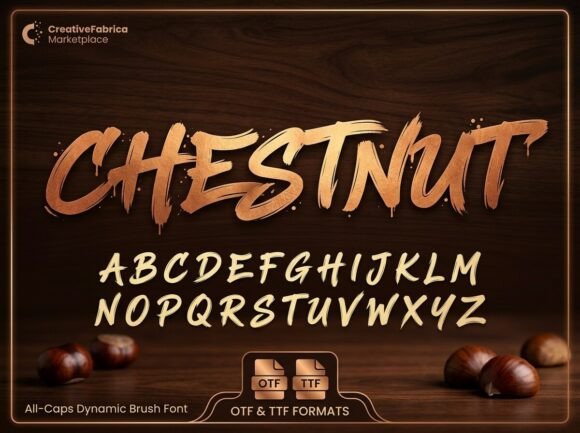
Chestnut: A Dynamic Display Typeface for Editorial Design
I remember the moment I opened my design software to tackle a new editorial project: a digital guide for independent wedding planners. The content was solid, but the visual identity felt flat and generic. I needed something that could command attention without screaming for it. That is when I decided to Chestnut, an all-caps brush font that promises to infuse designs with raw energy and handcrafted texture. As I began testing this typeface in various layout scenarios, from newsletter headers to printable worksheets, it became clear that this display font offers more than just style; it provides a distinct narrative voice for modern creators.
Chestnut for Wedding Invitations and Elegant Branding
The first time I applied Chestnut to a wedding invitation suite, the aggressive, sweeping strokes immediately transformed the mood of the piece. This dynamic all-caps brush font captures the organic imperfection of a real bristle brush, featuring realistic bristle-drag details that add a tactile quality to digital files. In the context of event branding, where couples often seek a balance between modern minimalism and rustic charm, Chestnut serves as a perfect anchor. It works exceptionally well for main titles, monograms, and section dividers, creating a sense of luxury that feels personal rather than mass-produced. When paired with a delicate serif font for the body text, the contrast creates a sophisticated hierarchy that guides the reader's eye naturally through the invitation details.
How Chestnut Enhances Magazine Covers and Feature Pages
For editors looking to revitalize a magazine cover or a long-form feature page, Chestnut acts as a powerful tool for visual storytelling. Its unique character allows headlines to stand out amidst dense columns of text, drawing the reader in before they even begin reading. The font's personality shines when used for pull quotes or drop caps, adding a layer of artistic flair that standard sans-serif or serif fonts simply cannot achieve. Because it is designed as a display font, it excels at short bursts of text rather than extended paragraphs, making it ideal for capturing attention on social media graphics or digital magazine thumbnails where space is limited but impact must be high.
Chestnut for Printable Planners and Coaching Workbooks
When designing digital products like coaching workbooks or printable planners, the typography needs to feel encouraging yet professional. I tested Chestnut on a series of worksheet layouts intended for online course creators, and the results were striking. The handcrafted texture gives the pages a warm, approachable feel, which is crucial for educational materials that aim to build trust with students. Using this font for chapter openers and key takeaway boxes helps break up the content, preventing the "wall of text" effect that can discourage learners. The font's dynamic nature ensures that each page feels alive, reinforcing the brand identity of the creator while maintaining readability for the instructional content.
Using Chestnut in Newsletter Graphics and Blog Headers
In the fast-paced world of email marketing and blogging, grabbing attention within seconds is essential. I found that Chestnut is particularly effective for newsletter headers and blog post titles where the goal is to establish a strong emotional connection instantly. The realistic bristle-drag details add a human element that makes the communication feel less corporate and more authentic. Whether you are announcing a new product launch or sharing a personal story, this dynamic all-caps brush font adds a layer of authenticity that resonates with readers. However, it is important to remember that while it is excellent for headlines, it should not be used for the entire email body, as its expressive nature can become visually fatiguing over long distances.
Pairing Chestnut with Serif and Sans Serif Fonts
Successful editorial design relies heavily on thoughtful font pairing, and Chestnut requires a complementary typeface to balance its bold energy. For projects involving recipe ebooks or lifestyle blogs, I recommend pairing this display font with a clean, readable serif font for the main body copy. The classic structure of a serif font grounds the composition, allowing the raw energy of Chestnut to shine in the headings without overwhelming the reader. Alternatively, for a more modern, tech-forward look in digital magazines or app interfaces, a geometric sans serif font can provide a crisp contrast that highlights the brush strokes of the display font. This combination ensures that the publication maintains a cohesive identity while optimizing for both aesthetic appeal and functional readability.
Technical Considerations for Commercial Font Usage
Before integrating Chestnut into any commercial project, such as client publications or paid digital downloads, it is vital to review the specific file formats and licensing terms included. Most premium display fonts come with a variety of styles, including standard weights and special alternates that can add further customization to your designs. Checking for multilingual support is also crucial if your audience spans different regions, ensuring that the text renders correctly across all platforms. While the font is optimized for screen reading and mobile layouts, designers should always test their final exports in PDF format to ensure that the bristle-drag details remain sharp and true to the original design intent. By understanding these technical nuances, creators can fully leverage the potential of this creative font to elevate their brand identity.
Chestnut for Digital Magazines and Course PDFs
The versatility of Chestnut extends beyond print and into the realm of interactive digital media. For authors and course creators building comprehensive PDF guides, this typeface offers a way to inject personality into otherwise dry instructional material. The aggressive, sweeping strokes create a sense of movement that keeps the reader engaged as they navigate through chapters and modules. When used strategically for subheadings and callout boxes, it helps organize complex information into digestible chunks. However, caution is advised when using it for dense paragraphs or small captions, as the expressive nature of the brush font may reduce legibility at smaller sizes. Reserving it for impactful moments ensures that the font remains a highlight rather than a distraction.